
Population and Demographics of Monaco
Comprehensive demographic statistics, population breakdown by nationality, and population trends in Monaco
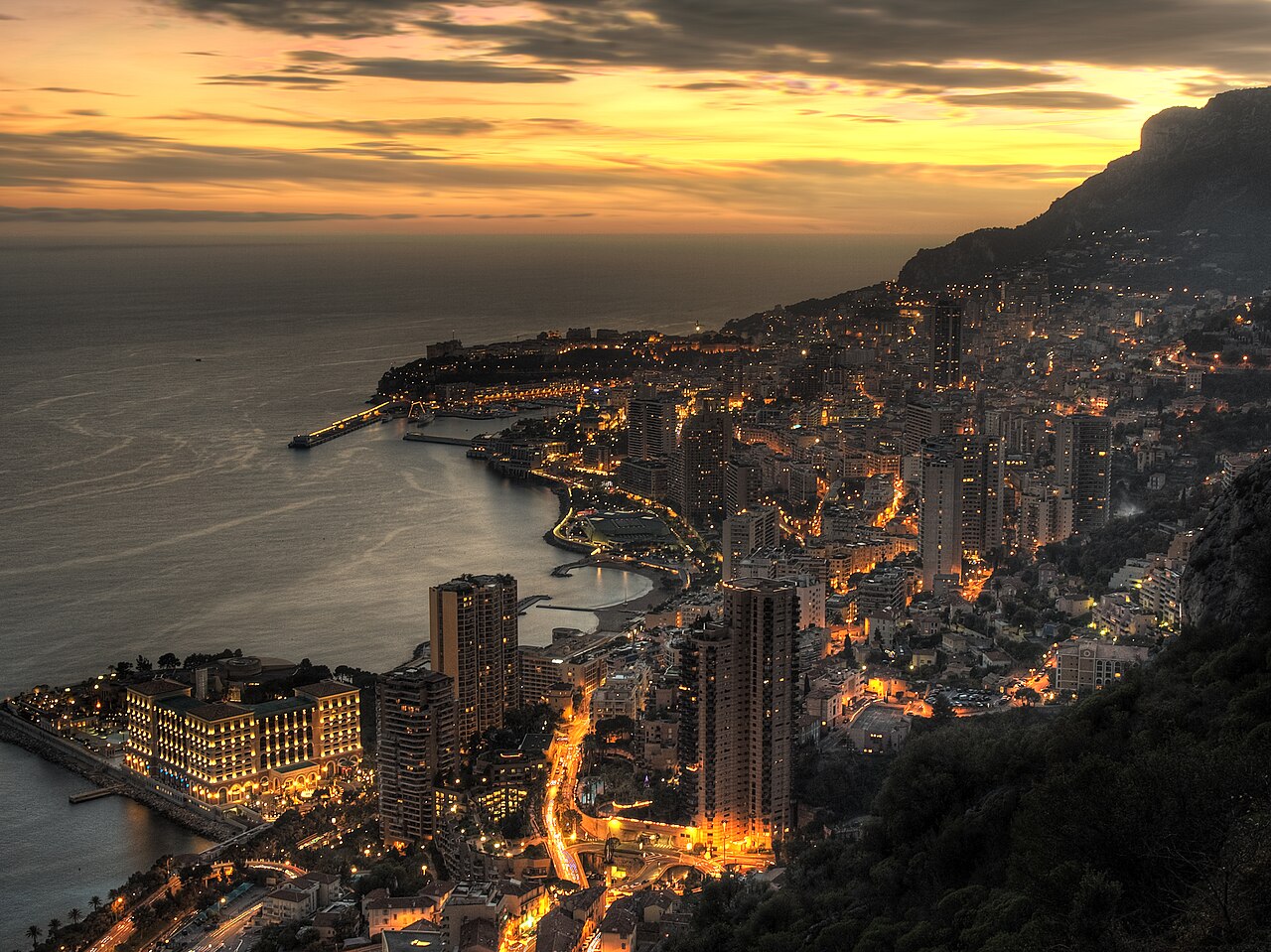
Key facts
- Total Population
- 38,367 (2023 census)
- Population Density
- Around 19,000 per km²
- Monegasque Citizens
- 9,179 — 23.9%, the largest single nationality
- Nationalities Represented
- 141
- Area
- 2.02 km² (0.78 sq mi)
Overview
Monaco is one of Europe's smallest and most densely populated territories. The 2023 census, published by IMSEE (the Monegasque statistics institute) in November 2024, counted 38,367 residents across just 2.02 square kilometres (0.78 square miles), representing 141 nationalities.
Population Statistics
Total Population Figures
All the figures on this page come from the 2023 census and refer to the situation at 31 December 2023. Monaco is counted every seven to eight years; the previous census was taken in 2016.
Monaco's population has grown only modestly in recent decades, and the headline number is usually rounded to "about 39,000". That rounding is harmless on its own, but it often travels with much vaguer claims about who lives here — so the nationality figures below are given as the census reports them rather than as estimated ranges.
The population structure reflects Monaco's status as a wealthy jurisdiction with a developed economy. Natural growth is modest, with most demographic change driven by migration rather than births.
Population Density
Monaco ranks among the world's most densely populated territories:
| Metric | Value |
|---|---|
| Total Area | 2.02 km² (0.78 sq mi) |
| Population Density | ~19,000 per km² |
| Ranking | 1st in the world among sovereign states |
| Denser territories | Macau and Hong Kong (both non-sovereign) |
This extreme density reflects Monaco's geographic constraints as a small coastal nation and its development as an ultra-compact urban state with no agricultural land.
Nationality Breakdown
Monegasque Citizens
9,179 residents hold Monegasque citizenship — 23.9% of the population. The 2023 census marked a turning point: for the first time, Monegasques were the largest single nationality in the Principality, overtaking the French. Their number rose 9.6% between the 2016 and 2023 censuses, while the French and Italian shares both fell.
Monegasques nevertheless remain a minority of the total population. Nationality is acquired principally by descent from a Monegasque parent, and far more rarely by naturalisation granted by Sovereign Ordinance — which is why the citizen share moves slowly despite steady growth.
The indigenous Monegasque population has cultural roots in the Ligurian region and maintains distinct cultural traditions, including the Monegasque language (related to Ligurian and Occitan linguistic families).
Foreign Nationals
Roughly 29,200 residents — about 76% — hold a foreign nationality. Two communities dominate, and the drop-off after them is steep:
| Nationality | Residents | Share | Notes |
|---|---|---|---|
| Monegasque | 9,179 | 23.9% | Largest nationality since the 2023 census |
| French | 8,473 | 22.1% | Largest foreign community; border proximity |
| Italian | 7,515 | 19.6% | Historical ties; proximity to Liguria |
| British | 2,870 | 7.5% | Largest non-neighbouring community |
| Russian | 1,199 | 3.1% | Sharp increase since the 2016 census |
| Swiss | 1,186 | 3.1% | Long-established community |
| Belgian | 1,023 | 2.7% | Long-established community |
| German | 927 | 2.4% | Smaller established community |
Beyond these eight, no single nationality reaches 2% of the population: Portuguese and Dutch residents each account for roughly 1%, and the remaining 130-odd nationalities are smaller still. Monaco's foreign population includes retirees, business owners, finance and maritime professionals, service-sector workers and diplomatic staff.
Note that "resident" and "worker" are different populations. Most people who work in Monaco live in France or Italy and commute in daily, so the nationality mix on the street during a working day looks quite different from the census figures above.
Age Structure and Family Demographics
Monaco has an aging population consistent with developed European nations. The median age is approximately 54-56 years, reflecting both the migration of retirees to Monaco and relatively low birth rates.
Family structures in Monaco include:
- Young professional families - often associated with financial and maritime industries
- Retirees - attracted by climate, healthcare, and tax considerations
- Intergenerational wealthy families - with long-standing Monaco residence
- Single professionals - in banking, real estate, and service sectors
Population Trends and Changes
Historical Growth
Monaco's population has grown modestly since the 1960s:
- 1960s: ~20,000 residents
- 1980s: ~27,000 residents
- 2000s: ~32,000 residents
- 2020s: ~39,000 residents
Growth has been primarily driven by immigration rather than natural population increase. The post-war period saw significant development and expansion that attracted international residents.
Recent Trends
Recent population trends include:
- Stabilization - population growth has moderated since the 1990s
- Aging - median age continues to increase
- International composition - increasing diversity of expatriate nationalities
- Service sector growth - related growth in service industry workers
- Post-pandemic patterns - return of expatriate residents following COVID-19 restrictions
Districts and Population Distribution
Monaco is commonly described through its quartiers (neighbourhoods), which are also used by IMSEE as statistical circumscriptions. The nine districts covered on this site are:
- Monaco-Ville — the Rock, seat of the Prince's Palace
- La Condamine — the historic port quarter
- Monte-Carlo — the Casino district and luxury hotels
- Fontvieille — modern district reclaimed from the sea
- La Rousse / Saint-Roman — residential area on the eastern edge
- Larvotto — public beaches and seafront residences
- Les Moulins — densely built-up area near the French border
- Moneghetti — hillside residential district
- Le Portier — the new Mareterra extension on the sea
Population is unevenly distributed: more recently developed districts such as Fontvieille, Larvotto and Le Portier tend to host younger residents, while historic neighbourhoods skew older.
Education and Qualifications
Monaco's population includes a high proportion of university-educated residents. The available workforce is characterized by:
- High educational attainment
- Multilingual capability (French, English, Italian commonly spoken)
- Professional specialization in finance, real estate, and service industries
- International work experience
Healthcare and Life Expectancy
Monaco maintains life expectancy figures consistent with Western Europe's most developed nations:
- Life expectancy at birth: ~86-89 years
- Access to advanced medical services through CHPG and private providers
- Low infant mortality rates
- Comprehensive health insurance coverage
Migration and Residency Patterns
Factors Attracting Migrants
Key factors driving migration to Monaco include:
- Tax advantages - favorable tax regime for residents
- Climate - Mediterranean climate and coastal location
- Political stability - stable constitutional monarchy
- Quality of life - high living standards, safety, healthcare
- Financial services - global financial hub opportunities
- Real estate investment - property value appreciation
Residency Requirements
Non-Monegasque residents typically must meet financial requirements and housing conditions. The Monaco Welcome Office assists with residency procedures for qualified applicants.
Statistical Resources
For detailed demographic data and statistics:
- IMSEE (Institut Monégasque de la Statistique et des Études Économiques) - Official source for population statistics, census data, and demographic trends
- Gouv.mc - Government portal with official statistics and demographic information
- Statistical yearbooks - Annual publications with comprehensive demographic tables
Data Collection Methodology
Monaco conducts regular population censuses and maintains ongoing administrative records through:
- Decennial census operations
- Administrative registration systems
- Immigration and residency records
- National statistics collection programs
Population figures referenced in official documents may vary slightly based on methodology and inclusion of temporary residents versus permanent registrations.
Conclusion
Monaco's population represents a unique demographic profile within Europe—a small, wealthy, multinational community with very high population density. The composition reflects Monaco's role as a global financial center, luxury destination, and cosmopolitan city-state. Understanding Monaco's demographic structure is essential for those considering relocation, conducting business, or researching European demographics and migration patterns.
Frequently asked questions
The information provided is for general guidance only. For official procedures, always consult the official sources.
Related pages
See all guidesMonaco Moneghetti Neighbourhood - Residential Charm
Moneghetti: residential neighbourhood, local shops, cafés and authentic Monaco district
Accessibility Guide for Monaco: Disabled Visitors
Monaco accessibility: wheelchair access, disabled services, hotels, transportation, attractions
La Condamine, Monaco: market, local life and visitor guide
La Condamine district: the Marché de la Condamine, local shops, restaurants, everyday Monaco life and a practical visitor guide.
Understanding the Conseil National, Monaco's Parliament
How Monaco's 24-member parliament works: who votes, how seats are allocated, the two annual sessions, what it can and cannot do against the Prince's Government, and how to follow or contact it.