Diving Monaco's Marine Reserves: Larvotto, the Spélugues and the Rules
Monaco's two marine protected areas explained for divers and snorkellers: what lives in the Larvotto and Spélugues reserves, what is forbidden, spring closures and the dive sites beyond the border.
Key facts
- Marine protected areas
- Two: Larvotto (1976, about 33 ha) and the Spélugues coral drop-off (1986, 1.9 ha)
- Managed by
- AMPN, with the Direction de l'Environnement
- Forbidden in both
- All fishing, anchoring and taking any organism
- Boats
- Banned inside Larvotto; tolerated in the Spélugues next to Port Hercule
- Sea temperature
- About 14–15 °C in winter, 21–25 °C in summer
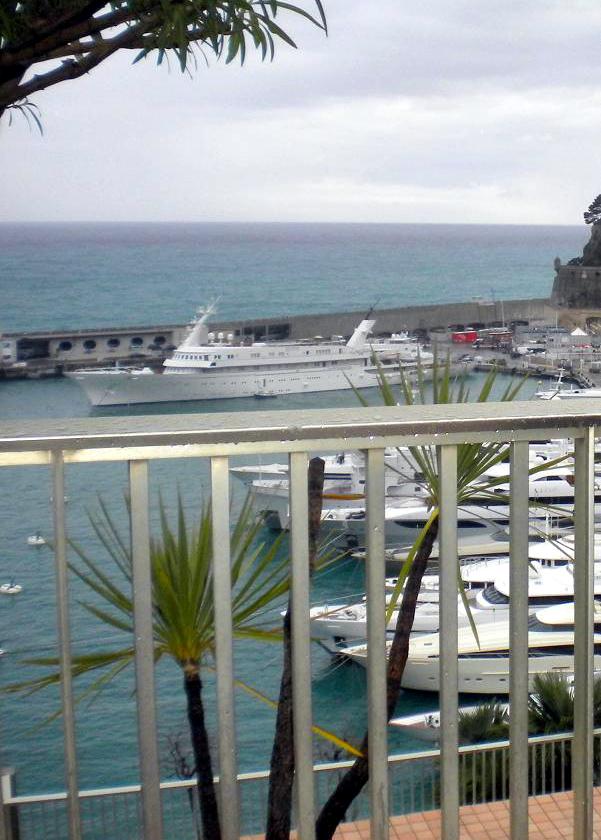
For a coastline almost entirely built up, Monaco has kept a surprising amount of life underwater. Two marine protected areas — among the oldest on the Riviera — hold a posidonia meadow, a coral drop-off at the harbour mouth and fish populations that have had fifty years without being fished. This guide explains what is in them, what you may and may not do, and where the dive boats go beyond the border. To actually book a dive — the two clubs, their 2026 prices and what to bring — see our guide to scuba diving in Monaco: the two clubs, prices and how to start.
The two marine protected areas
Both reserves are managed by the Association Monégasque pour la Protection de la Nature (AMPN), founded in 1975, in coordination with the government's Direction de l'Environnement. A sovereign ordinance formalised that role in 2018, and the AMPN has belonged to MedPAN, the Mediterranean network of marine protected area managers, since 2016.
Larvotto (1976)
| Created | 1976 |
| Area | About 33 hectares |
| Where | In front of the Larvotto beaches, from the beach cove to the eastern limit of Monegasque waters, reaching about 600 m offshore |
| Protects | A meadow of Posidonia oceanica, the Mediterranean's endemic seagrass, and the species that shelter in it |
Posidonia is the Mediterranean's nursery: its meadows oxygenate the water, hold the sand in place and shelter juvenile fish. Since November 2017 the AMPN has also placed 3D-printed artificial reefs in the Larvotto reserve, made of dolomite sand rather than concrete, with cavities designed for the species it wants to attract.
The Spélugues coral drop-off (1986)
| Created | 1986 |
| Area | 1.9 hectares |
| Where | The entrance to Port Hercule, between the old Portier cove and the Lucciana jetty, reaching about 90 m from the shore |
| Protects | Monaco's only coralligenous seabed |
Small as it is, the Spélugues is the richer dive: red coral, sponges, gorgonians, long-spined urchins, grouper and the noble pen shell (Pinna nobilis), the Mediterranean's largest shellfish, which a parasite has decimated across the sea since 2016. Artificial reefs have been immersed here since the 1970s.
The rules
In both reserves:
- All fishing is forbidden, whatever the method — line, net or spear
- Anchoring is forbidden, even for a short stop
- Nothing may be taken: no shells, stones, urchins or anything living
- Scuba diving is regulated: dive with one of Monaco's two structures, which know the permitted sites and briefings
- Do not touch, chase or feed marine life, and keep your fins off the posidonia and the coral
Navigation differs: boats are banned inside the Larvotto reserve but tolerated in the Spélugues because it sits at the harbour mouth. The reserves are patrolled by the police maritime division, and anyone with a boat should plan a route that stays outside the marked perimeter.
Spring closures. Before each bathing season the Larvotto beach is levelled, and a ministerial order closes the two coves to swimming and diving for the duration, with anti-turbidity nets around the works. In 2026 that ran from 7 to 24 April. Outside the reserves, the Larvotto swimming zones are marked with buoys and closed to motorised craft — see our beach safety guide.
What you can see
- In the posidonia (Larvotto): sea bream, octopus and shoals of juvenile fish
- On the rock and coral (Spélugues and the drop-offs): grouper, moray eels, scorpionfish, red coral, gorgonians, sponges and long-spined urchins
- In open water: shoals of barracuda in summer, and occasionally tuna seeking shelter around the harbour breakwater
Both clubs take part in participative science with the AMPN — counting fish, assessing the state of dive sites and searching for surviving pen shells — and the CESMM joins the Institut océanographique's seahorse surveys. A certified diver joining a club can often take part.
Beyond Monaco's waters
Most dive outings from Monaco cross the border within minutes. The Académie Monégasque de la Mer lists more than 40 sites between Cap de Nice and Menton — shallows, drop-offs, caves and wrecks — most of them suitable for all levels. Highlights include:
- The Natura 2000 zone of Cap Martin, just east of Monaco at Roquebrune-Cap-Martin
- The drop-offs of the Villefranche-sur-Mer roadstead, to the west
- The chains of Port Hercule's semi-floating breakwater, descending past 60 m — a technical dive that, according to the FFESSM, only the CESMM is authorised to run
Visibility is generally best from June to October. In French waters, the same rule of thumb applies: dive with a structure, respect the depth limit of your level, and never collect anything.
Snorkelling
You do not need a tank to see the reserve's life. The Académie runs guided snorkelling outings: €50 for a weekday half-day (September to June) and, on weekends from May to October, a catamaran day with two guided snorkels for €75. The reserves also have an educational role: since 2019, an educational marine area at the Solarium Rainier III has introduced Monaco schoolchildren to the coastal seabed.
Who to contact
- AMPN (reserve management): Le Ruscino, 14 quai Antoine Ier, Monaco · +377 92 05 61 70 · ampn.mc
- Académie Monégasque de la Mer: Plage du Larvotto · +33 6 78 63 50 52
- CESMM: Cale de halage, Port de Fontvieille · +377 99 90 38 83
- Emergency at sea: Monaco harbour master on VHF channel 12; on land, 18 or 112
Related guides
Frequently asked questions
The information provided is for general guidance only. For official procedures, always consult the official sources.
Related pages
See all guidesHotel and resort pools in Monaco open to day visitors
Which of Monaco's luxury pools you can use without a room — the Olympic seawater pool at Monte-Carlo Beach, the sand-bottomed lagoon at the Monte-Carlo Bay, the Fairmont rooftop and the Thermes Marins — with 2026 dates, day-pass prices and what the public pools cost instead.
AS Monaco Basketball: Betclic Élite and EuroLeague guide
AS Monaco basketball, matches, coaching, and basketball culture
Monaco beach clubs directory: every private beach and pool club
The four private beaches on Larvotto, Nikki Beach on the Fairmont rooftop, the Monte-Carlo Beach Club, Le Méridien Beach Plaza and the Monte-Carlo Bay lagoon — who runs each, where it is, its 2026 season and how to book.
Best Photography Spots in Monaco: Must-Visit Locations
Best photo locations Monaco. Scenic views, landmarks, Instagram spots, photography tips.