
Property Law in Monaco: Ownership, Copropriété and the Housing Sectors
How property is held in Monaco (freehold in copropriété — there is no leasehold system for private buyers), what the State's domanial stock is, the notary's role, the 4.75% registration duty under loi n° 1.381, the four rental sectors and where a lease is actually registered.
Key facts
- Form of ownership
- Full freehold, almost always as a lot in a copropriété; no ground leases for private buyers
- Foreign ownership
- Unrestricted — no authorisation, no residency condition
- Registration duty
- 4.75% for individuals and transparent Monaco SCIs; 10% for opaque entities (loi n° 1.381 as amended 2023)
- Notaries
- Three notarial offices, appointed by sovereign ordinance; every sale passes through one
- Rental sectors
- Libre (post-1947), protégé (loi 1.235), libéralisé (loi 887), domanial (State)
- Lease registration
- Direction des Services Fiscaux — 1% droit de bail, within 3 months, paid by the tenant
Overview
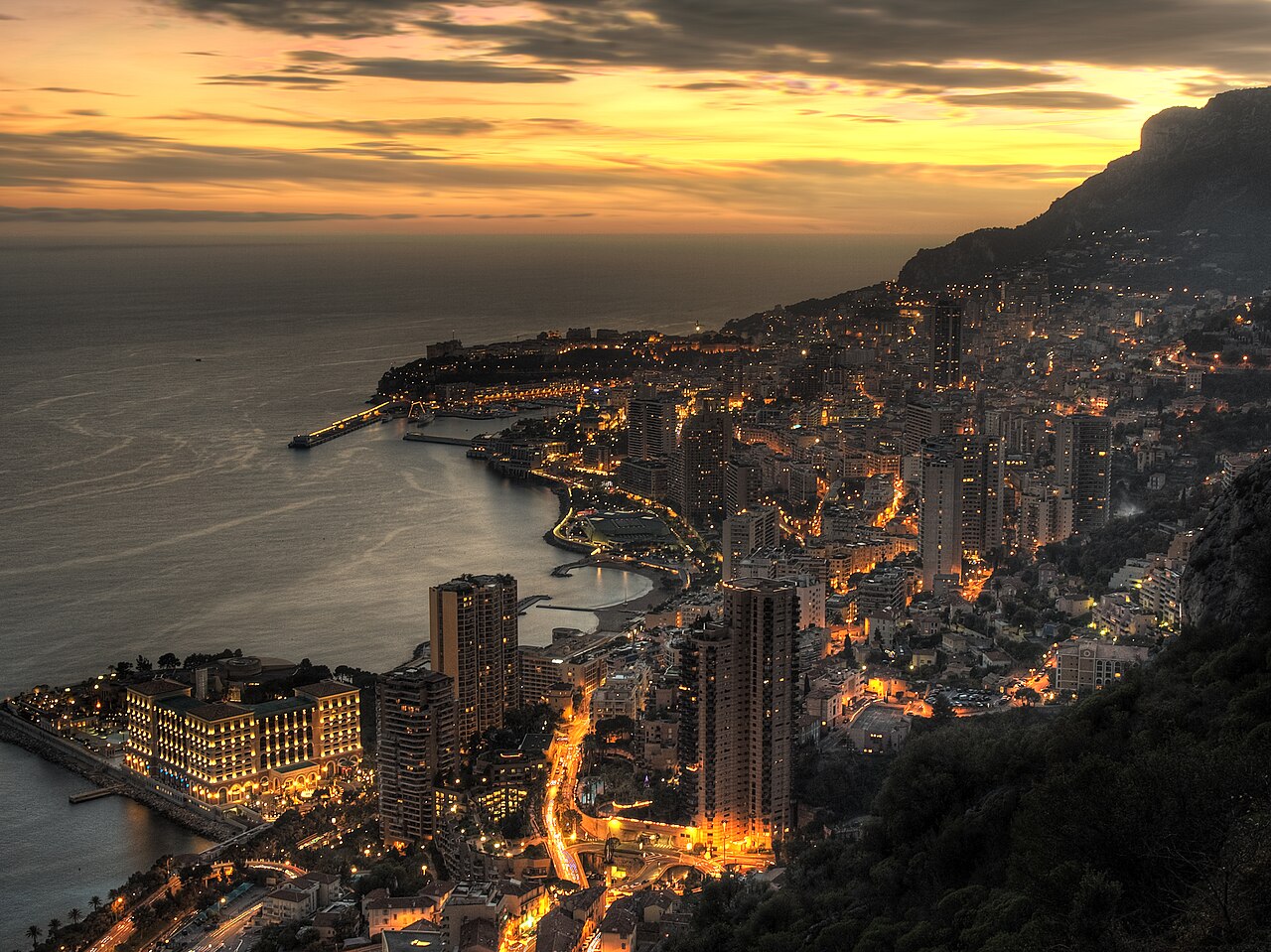
Property in Monaco is governed by Monegasque law — not French law, even though the vocabulary (notaire, copropriété, compromis de vente) is the same. The Principality's 2.02 km² and its housing policy for Monegasque nationals shape three things a buyer or tenant needs to understand: how ownership is held, how a transfer is taxed, and which of four rental sectors a given building falls into. Prices, the reason most people read about the subject, are on the real estate investment guide.
How property is owned
Freehold in copropriété
Private property in Monaco is held in full ownership (pleine propriété). Almost all of it is apartments, so almost all of it is a lot in a copropriété: you own your apartment outright plus a share of the common parts, and the syndicat des copropriétaires — all the owners, meeting at least once a year — votes the budget, the works and the appointment of the syndic who manages the building. Major decisions on the common parts require qualified majorities; the règlement de copropriété can restrict uses (short-term letting, professional activity, works on facades), and a buyer should read it before signing.
There is no general leasehold or state ground-lease system for private buyers. A private apartment in Monaco is not held on a 99-year lease from the State; when you buy, you own. The confusion comes from two real things that are not this:
- The State's own housing stock — the secteur domanial. The State owns a large and growing portfolio of apartments (the biens domaniaux), which it lets to Monegasque nationals under a points system. These are never sold to the public; they are the subject of the domanial housing guide.
- Land reclaimed from the sea. Fontvieille, Larvotto and Mareterra were built on land created by the State, which then sold or granted building rights; the apartments built there are held in ordinary full ownership like any other.
Villas and whole buildings held by a single owner exist but are rare.
Foreign ownership
There are no nationality restrictions on purchasing property in Monaco, no prior authorisation and no residency condition. Foreign nationals, resident or not, individuals or companies, may buy freely. Buying does not confer residence rights: the residence card is a separate application to the Section des Résidents of the Sûreté Publique, in which the deed serves as proof of accommodation.
How a transfer is taxed
Monaco taxes property once, on transfer, under loi n° 1.381 of 29 June 2011 as amended by loi n° 1.548 of 6 July 2023:
- 4.75% registration duty when the buyer is a transparent person — a natural person, or a Monegasque civil company whose partners are all natural persons known to the Direction des Services Fiscaux;
- 10% when the buyer is any other entity (foreign company, trust, company with corporate shareholders), which must also appoint a mandataire agréé and declare its beneficial owners every year;
- a reduced duty on new builds sold with VAT, so that statutory costs on a VEFA purchase fall to about 2.5% instead of about 6.25%.
On top of the duty come the notary's fees, about 1.5% plus VAT. There is no annual property tax, no wealth tax and no capital gains tax for individuals; French nationals remain taxable in France under the 1963 convention. Cost scenarios and holding structures are worked through in buying as an investor.
The notary
Every sale of Monaco real estate is an authentic deed drawn up by one of the three Monaco notaries, public officers appointed by sovereign ordinance under the ordinance of 4 March 1886. The notary drafts the compromis de vente (with the buyer's 10% deposit held on the notary's account), verifies title and encumbrances, collects the registration duty at signature, and registers and publishes the deed. Two to three months between compromis and deed is usual. The notary is not the buyer's lawyer: for structuring advice, home-country tax or a contested copropriété, instruct a Monaco avocat as well. See the notaries and property guide.
Renting: the four sectors
Which rules apply to a tenancy depends on the building, not on the tenant or the lease:
| Sector | Buildings | Who may rent | Regime |
|---|---|---|---|
| Secteur libre | Completed after 1 September 1947 | Anyone | Rent and term free; the general law of contract plus the rules below |
| Secteur protégé (loi n° 1.235 of 28 December 2000) | Completed before 1 September 1947, privately owned | Registered personnes protégées — Monegasques, then people born or long resident in Monaco, in five priority levels | Six-year leases, rents indexed and benchmarked by ministerial decree, offers published in the Journal de Monaco, State pre-emption on sales |
| Secteur libéralisé (loi n° 887 of 1970) | Also pre-1947, privately owned | Residents domiciled or employed in Monaco for 5+ years, Monegasques, the landlord's relatives | Landlord declares vacancies to the Direction de l'Habitat within 8 days |
| Secteur domanial | State-owned | Monegasque nationals, on a points system | Allocated by ministerial decision; not a private market |
The practical consequence: an investor or a newcomer deals with the secteur libre; the three other sectors exist to house Monegasques and long-standing residents. The sectors are explained in detail in the rental market guide.
Rules in the secteur libre
- Leases are commonly for one year with tacit renewal, but the term is free; three months' notice is the market norm.
- The deposit is capped at three months' rent and must be returned within two months of handover, less justified deductions.
- An état des lieux is drawn up at entry and exit, contradictorily or by a huissier at shared cost.
- The tenant pays the agency (10% of the first year's rent + VAT under the Chambre Immobilière Monégasque scale).
Where a lease is registered
Every lease is registered with the Direction des Services Fiscaux, not the Direction de l'Habitat: the droit de bail of 1% of the rent and charges over the term, borne by the tenant, is paid within three months of signature at the DSF's duty division (since July 2026 at Terrasses de Fontvieille, 24/26 rue du Gabian). Registration gives the lease a certain date and is what the Section des Résidents accepts as proof of accommodation. The Direction de l'Habitat's role is confined to the protected and liberalised sectors (registration of protected persons, publication of offers, vacancy declarations) and to housing aid.
Practical tips
- Read the règlement de copropriété and the last three years of assembly minutes before the compromis: works voted but not yet paid pass to the buyer.
- Ask the notary for the building's completion date — before or after 1 September 1947 decides whether you can let freely.
- Budget about 6.25% in duty and notary fees on a resale as an individual, plus 3% + VAT for the agency; 10% duty if buying through an opaque company.
- If buying for residency, open the Monaco bank account first: the bank's attestation of means is part of the residence file.
- As a tenant, keep the registered lease and the electricity contract: both are needed for the residence card.
The information provided is for general guidance only. For official procedures, always consult the official sources.
Related pages
See all guidesBuying Property in Monaco: Complete Legal Guide
Guide to buying property Monaco. Legal requirements, notaire role, process steps, transaction costs, foreign buyer rules, and residency considerations.
Domanial Housing in Monaco: Eligibility Guide
Guide to state-owned domanial housing in Monaco: eligibility requirements, waiting lists, allocation process, and Monegasque priority.
Role Of The Notary In Monaco Property Transactions
the notary's role in Monaco property purchases, legal requirements, and transaction process.
Buying Property in Monaco as an Investor: Costs, Structures and Financing
The investor's purchase playbook: the compromis and 10% deposit, the full cost of each scenario (6.25% resale, 2.5% new build, 11.5% via an offshore company), holding directly versus through a Monaco SCI or a foreign company under loi n° 1.381, bank financing, letting in the secteur libre, and what the exit costs.